Design for Plastic Fabrication Guide

Enhancing Rotomoulded Products through Fabrication & Extrusion Welding

Introduction

Plastic fabrication is the bridge between design flexibility and manufacturing practicality. In the world of rotational moulding, it allows products to go beyond mould constraints — enabling customisation, adaptation, and assembly into complete engineered solutions.

Through extrusion welding, heat forming, cutting, and mechanical assembly, fabricated plastics can deliver precision, durability, and creative freedom for designers and engineers. This guide provides a practical overview of what can be achieved through plastic fabrication — with real-world applications, design notes, and tips to help you specify and design with confidence.

Understanding Plastic Fabrication

Plastic fabrication complements rotational moulding by allowing modification and assembly after moulding. Using weldable thermoplastics such as polyethylene (PE), polypropylene (PP), and PVDF, components can be joined, reshaped, or extended without the cost of new tooling.

Common fabrication techniques:

  • Extrusion welding: fusing parts with compatible welding rod for high-strength joins
  • Hot air welding: for assembly and positioning prior to full welds
  • CNC/manual cutting: precise openings or shaped parts
  • Heat forming: bending or shaping sheet plastic to required contours
  • Mechanical fastening: bolting, flanging, or hybrid joints for modular assembly

Together, these methods create nearly unlimited possibilities for prototypes, modifications, and custom systems.

Typical Applications

Plastic fabrication can be applied to:

  • Custom one-off builds and prototypes
  • Structural modifications and upgrades
  • Retrofitting of fittings and outlets
  • Repair and refurbishment of existing equipment
  • Assembly of multi-component systems

From a simple welded outlet to a complete containment module — fabrication expands what’s possible with rotomoulded parts.

Fabrication Capabilities

Joining & Assembly of Rotomoulded Components

  • Welding multiple moulded sections end-to-end, side-by-side, or stacked
  • Building modular systems such as pontoons or large containment tanks
  • Joining moulded parts to fabricated sheet sections for hybrid designs
  • Creating double-wall or multi-chamber structures
  • Incorporating internal baffles or reinforcement ribs

Design Tip:

Provide access for welding tools and ensure sufficient wall thickness at weld zones for strength.

Fabrication from Sheet Plastic

  • Lining existing tanks with PE or PP sheet
  • Constructing guards, housings, and covers
  • Building one-off mock-ups or prototypes
  • Adding bund trays or containment bases
  • Forming reducers, transitions, or adaptors for pipework

Design Tip:

Ideal for low-volume or prototype work — sheet fabrication avoids tooling cost while delivering precision.

Fittings, Connections & Piping

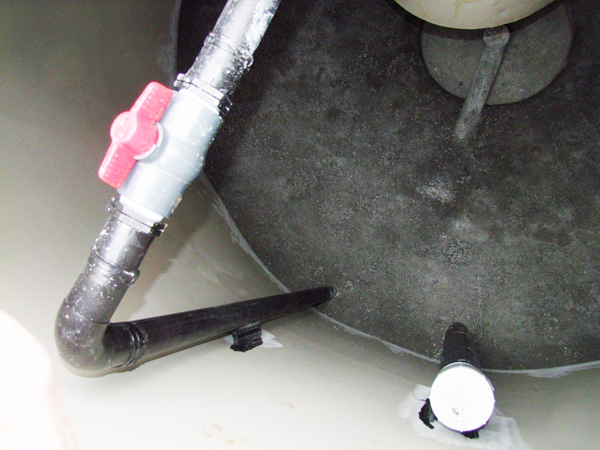
  • Installing or welding threaded/flanged outlets and inlets
  • Adding heavy-duty outlet assemblies with gusseting for load support
  • Connecting tanks via welded or flanged interlinks
  • Adding vents, sight tubes, inspection ports, and drains
  • Fabricating manifolds, distribution headers, or transition couplings

Design Tip:

Custom welded fittings can be located exactly where required — removing the limits of mould-in ports.

Structural Reinforcement & Support

  • Adding gussets and bracing for load-bearing outlets or lifting zones
  • Reinforcing bases or adding adjustable feet
  • Integrating steel or plastic frames
  • Adding mounting plates for pumps, mixers, or pipework
  • Installing stiffener rings or ribs to resist deformation

Design Tip:

Always identify load and stress points early to ensure reinforcement is built in during fabrication.

Access, Inspection & Safety

  • Adding manholes, lids, or hinged covers
  • Installing inspection windows, hatches, or view ports
  • Incorporating ladders, platforms, and handrails
  • Creating vented or lockable covers
  • Adding screens, filters, or overflow weirs

Design Tip:

Access features can be added even after installation, ideal for maintenance retrofits.

Modifications & Alterations

  • Adjusting tank height or shape
  • Converting open-top to closed vessels (or vice versa)
  • Relocating or adding outlets and fittings
  • Adding legs or pedestals for elevation
  • Trimming to fit confined spaces

Design Tip:

Many modifications can be performed on-site — a cost-effective alternative to product replacement.

Lifting, Handling & Mounting

  • Adding lifting lugs, eyes, or pad attachments
  • Integrating tie-down or anchor points
  • Welding forklift pockets or skids
  • Fabricating transport frames or mounting bases

Design Tip:

Incorporate handling features early in the design to ensure safe movement and installation.

Custom Accessories & Add-ons

  • Adding filter baskets, strainers, or internal frames
  • Mounting sensors, gauges, or instruments
  • Installing sight tubes, dipsticks, or calibration markers
  • Creating hinged lids, removable panels, or access doors
  • Forming dividers, splash lips, or pour spouts

Design Tip:

Accessories can be factory-integrated or retrofitted later as project needs evolve.

Prototyping & Development

  • Producing one-off prototypes or concept models
  • Modifying existing tanks to test design ideas
  • Building proof-of-concept systems
  • Making jigs or fixtures for other fabrication processes

Design Tip:

Fabrication allows rapid iteration — perfect for concept testing before committing to tooling.

Repairs & Refurbishment

  • Extrusion welding cracked or worn products
  • Replacing failed fittings or ports
  • Reinforcing abrasion zones or high-stress areas
  • Refurbishing tanks to extend operational life

Design Tip:

When performed on compatible materials, extrusion welds restore original structural integrity.

Advanced Fabrication

  • Integrating PVDF or PP liners for chemical resistance
  • Building bunded or double-walled containment systems
  • Combining different materials for hybrid performance
  • Heat forming custom curves and transitions
  • Constructing technical housings, kiosks, or display units

Design Tip:

Advanced fabrication expands rotomoulding into industrial, architectural, and design applications.

Design Considerations

When preparing a fabricated or hybrid design, consider the following:

  1. Material compatibility: Specify PE, PP, or PVDF for weld strength and chemical resistance.
  2. Weld access: Avoid tight corners or enclosed voids that limit weld tool reach.
  3. Structural loading: Identify stress zones for gusseting or reinforcement.
  4. Environmental exposure: Account for temperature, UV, and chemical conditions.
  5. Design communication: Provide drawings or sketches — even hand-drawn — for accuracy and faster turnaround.

Summary

Plastic fabrication transforms rotomoulded components into complete engineered systems.

Through welding, forming, and assembly, designers gain flexibility without tooling constraints — achieving high-performance, custom solutions across industrial, environmental, and architectural applications.

If you can imagine it, there’s a good chance it can be fabricated.

Ready to Start Your Project?

Let’s turn your design ideas into durable, fabricated solutions.

Contact the Melro Engineering Team at melro@melro.com.au or call (03) 5940 4334.

Contact us to discuss your project on (03) 5940 4334 or melro@melro.com.au
Stub Flange with gussets and backing ring
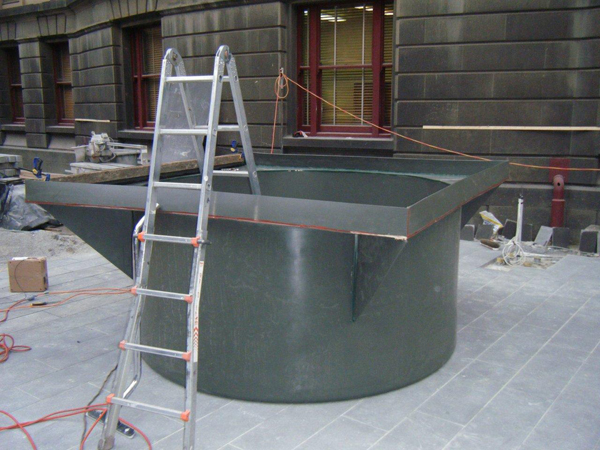
Plastic Fabrication Squat Tank
Plastic fabrications
Poly plastics
Plastic welded outlet
Ring Seal Sockets poly welded